Top Picks

Showing posts with label Recommended. Show all posts

WhiskyDad’s Guide to Father’s Day

1

WhiskyDad’s Guide to Father’s Day

Father’s Day is almost upon us (In Australia, it’s on the first Sunday in September) and if your father or husband is a WhiskyDad like me, look no further than my Father's Day guide for the WhiskyDad in your life (not just my own wishlist).

Whisky

The most obvious gift could also be the hardest to choose because you want to buy something your dad will like. My suggestion is to raid his whisky cabinet and find out what he drinks. You could either play it safe and buy what he already has or you could buy him something similar that he may not have tried before. The easiest way to do this would be to talk to the proprietor of a specialist whisky bottle shop and tell them what he drinks and ask for a recommendation of something similar. But if that isn’t possible, allow me to give you some loose rules.

He likes all whisky

By far the easiest dad to buy whisky for since you could buy him just about anything and he would enjoy drinking it. That said, I would look at what he usually drinks and buy something around the same price point.
This WhiskyDad knows what he likes, but what about what he doesn’t know he likes? 
He only drinks Jack Daniel’s

This WhiskyDad knows what he likes, but what about what he doesn’t know he likes? Jack Daniel’s and all its many special and limited editions, is a Tennessee whiskey. What’s a Tennessee whiskey? It’s bourbon, with an extra charcoal filtration step. A great alternative to Jack Daniel’s is another readily available Tennessee whiskey, George Dickel. George Dickel comes in No.8, No.12 and X varieties and my pick would be George Dickel No. 12 as a legitimate (and in my opinion, superior) alternative to Jack Daniel’s Old No. 7.

He’s a Peat Freak

This WhiskyDad loves his whisky smoky. Chances are he will drink anything from Islay but that isn’t the only peated whisky available. Look for any of these, Caol Ila, Bunnahabhain, Bruichladdich, Kilchoman, Bowmore, Lagavulin, Ardbeg, Laphroaig; or outside of Islay, Springbank, Longrow, Kilkerran, Talisker, Ledaig or Highland Park. Failing that, anything with ‘Peat’ in the label like independent bottlers Douglas Laing’s Big Peat or Compass Box’s Peat Monster should be fine.

He only drinks the cheap stuff

There’s nothing wrong with drinking whisky that doesn’t cost an arm and a leg, but chances are if it’s cheap, it’s a blended whisky. Not all blended whiskies are equal and some are quite expensive. One of the most famous and popular blended whiskies is Johnnie Walker. Johnnie Walker comes in a number of varieties that get progressively expensive of which Johnnie Walker Black Label and Double Black are a good balance of reasonable price and quality.
This may sound a little controversial, but most Irish whiskey is no different to Scotch whisky. 
He likes Irish Whiskey

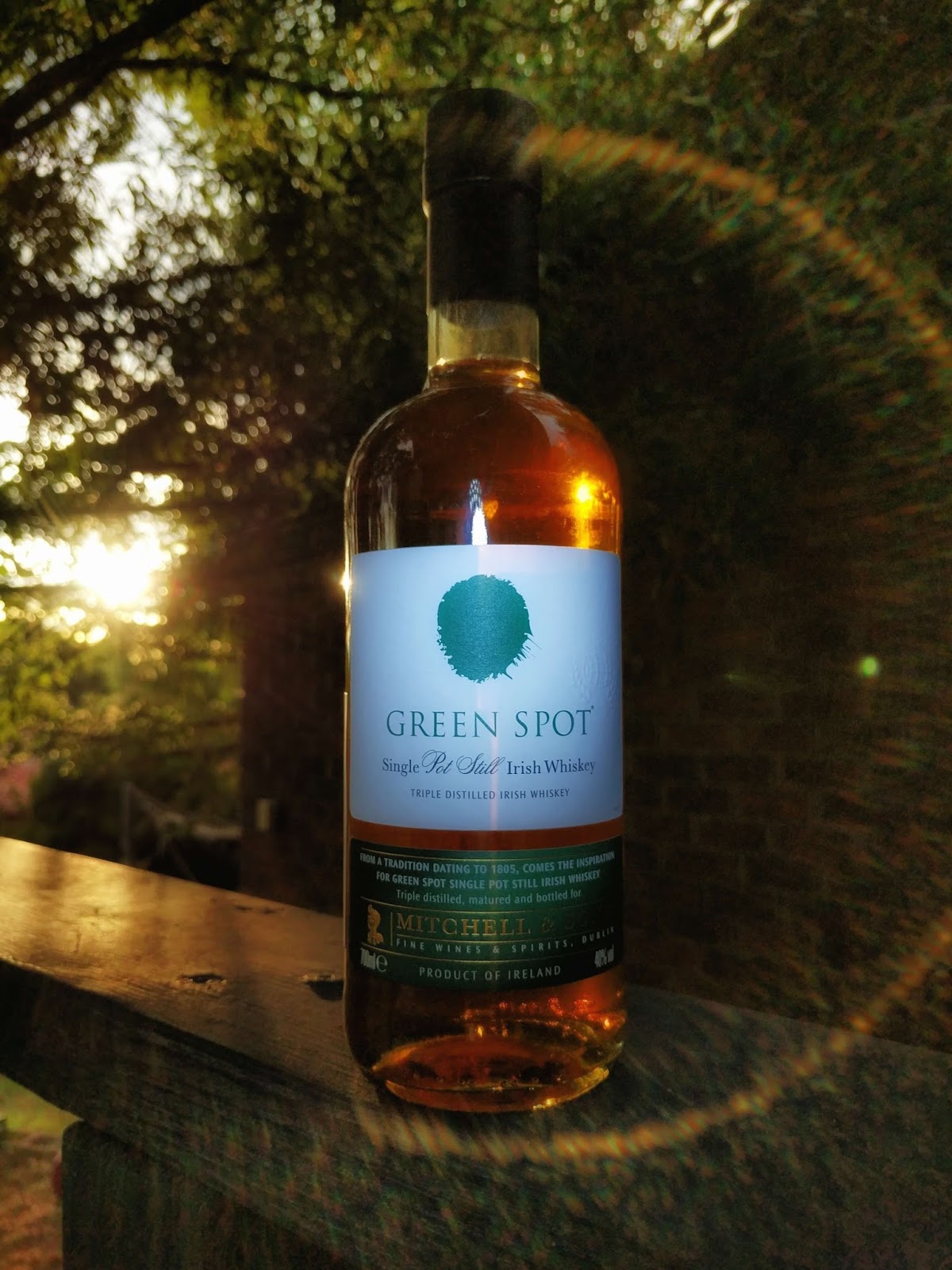
This may sound a little controversial, but most Irish whiskey is no different to Scotch whisky. If you look at the ingredients and the way both are made, there really isn’t a lot of difference between Scotch and Irish Whiskey other than the country of origin. There are a few exceptions but if you are going to buy an Irish whiskey, buy a Single Pot Still Irish whiskey like Redbreast, Green Spot, Yellow Spot or Powers. These are quintessentially Irish whiskeys and are quite different from any Scotch whisky.


He likes the burn

Does your dad like a whisky that burns in his chest and warms his insides? Then you should get him a cask strength whisky. Cask strength means the whisky is bottled at or near the ABV% it was straight from the cask. Most whisky is diluted with water before bottling to reduce the ABV% to a standard figure such as 40%, 43% or 46%. My pick for a cask strength whisky would be Aberlour A’bunah.
The older the whisky, the more influence the cask has over the flavour and often colour. 
He likes darker coloured whisky

If you dad drinks whisky that is generally darker and more amber than your average whisky, chances are it is ex-sherry cask (barrel) matured. Most whisky is matured in either ex-bourbon or ex-sherry casks. The older the whisky, the more influence the cask has over the flavour and often the colour. Ex-bourbon cask matured whisky usually has a vanilla dominant flavour whereas ex-sherry cask whisky has a dried fruit or Christmas Cake dominant flavour. Oh, he likes traditional Christmas Cake? Then ex-sherry cask matured whisky is a safe bet such as the excellent BenRiach 12 Year Old Sherry Wood Matured.

Something Australian

There are plenty of very good Australian whiskies on the market. Obviously, these are much easier to obtain from within Australia. Most are quite expensive, around $200 for 500ml, but not all are, such as Starward Wine Cask Edition which can be picked up from Dan Murphy’s for around $80-$90 for a 700ml bottle. Being originally from Tasmania myself, it would be remiss of me not to recommend a Tasmania whisky so how about a Lark Cask Strength from the distillery that started the recent whisky boom across the island state.

Something unexpected

There is nothing quite like surprising a Scotch snob with a great-tasting whisky from an unexpected region of the world. Did you know that India produces some amazing single malt whisky? I guarantee your Scotch-loving dad will enjoy either the Paul John Classic Select Cask or Amrut Fusion if they prefer a peated whisky.

Whisky gifts other than whisky

There are plenty of gift ideas for the whisky-loving dad other than whisky; consider some of these.

Something edible

Fancy yourself a bit of a cook? How about making some whisky fudge, some whisky cured bacon or whisky jerky? You could even ‘borrow’ some of your dad’s whisky to flavour it. Just don’t borrow the really expensive stuff.
The world of specialist whisky glassware can be a load of wank, but not all glasses are equal when it comes to drinking whisky. 
Whisky glasses

The world of specialist whisky glassware can be a load of wank, but not all glasses are equal when it comes to drinking whisky. In my opinion, the pinnacle of shape (performance), weight (comfort) and value (some glasses cost upwards of $50 each) is the Glencairn glass. These can be picked up for as little as $10-$17 each and are a great choice for a whisky-loving dad. There is even a more expensive crystal version of the Glencairn glass if you want something a little fancier.

If your dad drinks his whisky with a mixer, go for a nice crystal tumbler instead.

If you want something a little different, how about a quaich? A quaich is a shallow Scottish two-handed drinking cup. They can be made of metal such as pewter or silver but are traditionally carved from wood.

Artwork and accessories

A map of the whisky distilleries of Scotland by Manuscript Maps is an excellent gift for a WhiskyDad and looks great on any whisky fan’s wall. Factor in extra for postage and framing to get the best out of it.

Angel’s Share Glass make some great whisky themed accessories such as Glencairn shaped cufflinks.


Books

There are stacks of great books on whisky that would make excellent Father’s Day gifts. The World Atlas of Whisky is an excellent and hefty coffee table book whereas Whisk(e)y Distilled is more portable by no less detailed.

Pens

Check out these awesome pens, made from ex-bourbon barrels. They can even be personalised – I would love a couple of these myself. Hint, hint.


Image © bourbonpens.com 

1 comments

What Is Independently Bottled Whisky?

0

What Is Independently Bottled Whisky?


The Internet is a wonderful tool for the whisky enthusiast. Discovering and acquiring whisky has never been easier, with a dizzying choice of both old and new whiskies just a few mouse clicks away. I often browse my favourite websites checking prices and availability, reading tasting notes and writing wish lists of my next whisky purchases. For example, I am currently holding out for the latest Springbank 12 Year Old Cask Strength and Laphroaig 10 Year Old Cask Strength expressions. Historically, both tend to arrive in Australia in very limited quantities and sell out quickly.

During these online browsing sessions, especially when I was first getting serious about whisky, I kept stumbling across odd whisky labels. These whiskies were not produced by a particular distillery, but rather were sourced from a variety of distilleries and bottled under a different branding such as Gordon & MacPhail, Signatory, Rest & Be Thankful and Heartwood. This process, I would eventually learn, was called independent bottling and it was a practice that had been going on for almost as long as whisky had been produced.

So what is independent bottling exactly?

To understand independent bottling, you must first understand the fundamentals of whisky production. Whisky is an alcoholic spirit made from distilling a fermented cereal and aging it in wooden barrels or casks (the terms ‘barrel’ and ‘cask’ are interchangeable). When the fermented cereal (usually malt, in the case of Scotch whisky) is first distilled, it is a clear liquid distillate referred to as new make. This new make is not whisky in a legal sense, although it will become whisky once it has been aged in wooden barrels for a minimum legal period or longer. During this aging process, the new make and wood undergo a variety of marvellous chemical reactions and tannins from the wood leach into the liquid imparting a more familiar whisky colour. Many factors affect the interaction between distillate and wood; such as how long it remains in the barrel, the type of wood used in the barrel, what the barrel held if anything prior to being filled, the thickness of the barrel staves, the amount of char inside the barrel, the size of the barrel and the average temperature, temperature variations and barometric pressure within the storehouse etc. That is a lot of very influential factors that occur after distillation.

The decisions about how to use these factors are the tools of the independent bottler. An independent bottler will source and provide their own barrel or barrels to a distillery, to be filled with a new make (or very young) spirit. This spirit may be the same used to make the distillery’s signature expressions, but that is where the similarities end. Whatever whisky is produced from that independent bottler’s cask will be unlike anything else the distillery makes and will quite often be unique to that particular cask or casks.

So now that you know independent bottling is more than just filling a barrel with someone else’s whisky, here’s an interview with ‘Caskologist’ George Koutsakis of Whisky Foundation, a new e-commerce venture specialising in independently bottled whiskies.

WD: Welcome George, what is a ‘Caskologist’ and what is your involvement with Whisky Foundation?

GK: We are a small, yet passionate, team here at Whisky Foundation and we all take on a variety of different roles. The term ‘Caskologist’ is an invented term which best describes the part I play in the organisation.

My job is basically to manage and stay on top of anything to do with the Whisky Foundation website. Working closely with our sales team, I add, research, and sample new products and observe the statistics to find which bottles are of greatest interest to our customers.

With my past expertise in whisky tasting and events, and my experience writing, I also manage the Whisky Foundation blog, and try to create the most educational and captivating content to keep our readers entertained. In order to do so I closely follow industry news and new releases.

WD: What do you look for when selecting a cask and do you already have a potential new make spirit fill in mind?

GK: This is a question better answered by the independent bottlers themselves. The wonderful Italian independent bottler Wilson & Morgan, who select the finest Scottish casks to join their collections, have produced a few exclusive bottles for Whisky Foundation. Their brand ambassador Luca Chichizola, who is co-responsible for selecting casks alongside chairman Fabio Rossi, had this to say:
It must be exciting to us. We have tasted more than 3000 malts in our lives so far. So it must be ‘different’, it must shine. It must not induce a yawn or an ‘OK, more of the same’ thought. Even if it's still immature and rough, it must have personality. About new make... not very interesting to us, if I may say so. We always buy whisky that is already 3 years old, so that it has lost its most undesirable traits of immaturity and it's easier to see where it will go. With rum on the other hand (Wilson & Morgan has a sister company called Rum Nation) we definitely buy new make either for bottling white rum or for maturation.
WD: Mass produced whisky is commonly chill-filtered and even non-chill filtered, non-cask strength whisky is usually allowed to rest to separate the less soluble particulate matter or ‘floc’ before bottling. What are your thoughts on whisky filtration and how does this affect Whisky Foundation bottlings?

GK: When it comes to whisky filtration, I am a firm believer in sampling the whisky in its most natural form. I find non-chill filtered whiskies provide a ‘fuller’ and ‘richer’ mouthfeel, due to the presence of fatty acids and proteins, which are removed throughout the process of chill-filtration.

Non-chill filtration gives drinkers a more natural and organic experience. That cloudiness should be welcomed. Most of the independent bottlings we have at Whisky Foundation come just like that, at cask-strength and non-chill filtered, giving the raw, intense, unique flavour I love most in my whisky.

WD: What are some of the things that independent bottlers could do that would not be possible or perhaps financially viable in a large distillery?

GK: A large distillery needs to focus on consistency. Several flagship releases take up most of the distillery’s production capabilities, which, sadly, can restrict distillers and make it hard for them to create unique, one-off releases.

Independent bottlers, however, only create unique, one-off releases, which means their sole purpose is to experiment, observe, and release whiskies that have matured for the right amount of time, providing balance above all else.

The fact that these organizations hold so many different casks from different distilleries means that they can choose exactly how they treat the whisky. They can create unique blends, and use unique methods to age and bottle a whisky. Two casks of the same Scotch can be aged in different kinds of oak, for a different duration, and at different temperatures. Experimentation takes the front seat when it comes to independent bottling.

WD: A lot of whisky drinkers enjoy the familiarity and availability of a large distillery’s flagship whisky. How do you convince these people to buy an independently bottled whisky that is often much more expensive and likely to never be repeated?

GK: Firstly, people’s preconceptions need to be challenged. I look at large distilleries and independent bottlers as two completely different entities, in the same way I might look at a hotel and a villa. We need both, and both provide us with an amazing, yet very different service.

A large distillery will give you your favourite dram over and over again, whenever you need it for years, even decades. An independent bottler will give you something different every single time, challenging you to explore, learn, and delve deeper into the world of whisky.

It all comes down to education. Whisky tastings, promotions, and a whole lot of information can make all the difference. Step by step, we simply need to introduce people to independent bottling and show them what makes the experience so special and satisfying.

With a little knowledge about independent bottling and a willingness to explore, it’s possible to find a wealth of under-recognised whisky gems.

WD: Thanks for your time, George, and for sharing your thoughts on independently bottled whisky.

GK: Thank you for having me, it’s been a pleasure.


If you consider yourself a whisky enthusiast, you shouldn’t ignore independently bottled whisky. Independently bottled whisky present an opportunity to try unique expressions sourced from your favourite distilleries. A lot of thought goes into the cask selection process yet even with years of experience the results can be anything but predictable. This dramatic and often unpredictable effect that ageing whisky in wood has, is one of the things I love about whisky. It is comforting to know that no matter where the whisky was distilled, I can always be surprised.
0 comments

Belgrove Peated Rye Impressions

0

Belgrove Peated Rye Impressions

REVISITED 3rd April 2017 

What is it? 

Distillery: Belgrove, Tasmania, Australia
Name: Peated Rye Whisky
Make: Tasmania Single-Barrel Peated 100% Rye Whisky
Extra Info: Belgrove sets a benchmark for sustainable craft distilling. Founder Peter Bignell grows his own rye, made his own copper still from scratch, collects rainwater from the roofs of his sheds, heats it with biodiesel that he makes himself from waste oil (which also powers his tractors, forklift and truck), feeds his livestock used whisky mash and recycles waste water for irrigation. Lastly, the whisky is aged on site and hand bottled by Peter. How's that for environmentally responsible farming and Ozzy ingenuity?


ABC Australia Radio Interview (7:20)

Listen to Peter Bignell talk to ABC Rural's Nick Bosley-Pask about his Belgrove Distillery. LINK


Why did I buy it?

It has been two years since the last Belgrove Peated Rye was bottled (I know this because Peter said the file he uses to print the label himself, was last opened on his computer two years ago). I had heard good things about the Peated Rye but had never been able to find a bottle until now. It is aged for a little over two years in a single 100L ex-Overeem malt whisky cask and peated with locally sourced, tea tree swamp peat from Waterhouse on the north-east Tasmanian coast. Peter pops up from time to time at local markets, but you can always buy directly from the Belgrove website if you cannot make it to Tasmania.

What did I think of it?

Presentation: The small square-profile 500ml bottles with home printed and hand written labels have a delightful craft market look to them and the black wax seal and stamp add an air of elegance. Unfortunately, the wax seal hides a plastic screwtop underneath, rather than a cork stopper, but it is of little concern to most.

Appearance: Naturally light Amber in colour, non-chill filtered and bottled at 52.3% ABV.

Aroma: Candied smoke. Notes of sweet mints and vanilla rise above a restrained smoke. Inhaling at varying distances from the glass help isolate each aroma since it doesn't belch smoke as soon as you pour, like some of the peatier Islay malts. Clove spice presents momentarily, encouraging me to dig for more aromas with my nose in and out of the glass like one of those drinking bird toys. (I think my initial notes were just about bang on the money. I love nosing this whisky, it has so may layers yet very little alcohol burn for such as high ABV.)

Flavour: It is not until you take your first sip, that this whisky fully comes alive. The mouthfeel is deliciously oily and full bodied, urging you to delay swallowing with flavours that seem to develop endlessly. The smoke that appeared a little coy on the nose, blasts forward evoking memories of crunching singed clumps of grass underfoot while walking through a freshly burnt out section of Australian bush. Some fruity sweetness and powdered ash settle on the tongue. Draw in some air to bring out new intense aromas of smouldering bark, rising into your sinus cavity from the gently warming liquid in your mouth. Spices tingle on your taste buds as the whisky warms to body temperature, but it never reaches the pins & needles intensity of some other high-alcohol whiskies. It is smooth, measured and balanced. (I think the cooling menthol comes in a little earlier than the finish and perhaps presents as peppermint.)

Finish: Just when I thought it had given all it had to give, the Belgrove Peated Rye continues to deliver. A smooth, medium to long finish of cooling menthol and fading spice with one last parting puff of smoke leaving behind a slightly bitter aftertaste. What a whisky! (Yep, simply divine. One of my favourites.)

Would I buy it again?

Yes, $200 AUD for 500ml isn't cheap, but it is probably at the lower end of typical Tasmanian craft whisky prices and is fully justified considering the locally sourced ingredients and personal care that goes into every bottle; not to mention the very limited supply of around 150 bottles. The Belgrove Peated Rye is a delicious and truly unique 100% Tasmanian whisky from an innovative sustainable craft distillery and a must try for any peated whisky fan or fan of Australian whisky in general. (I'm sure there is none left by now, but I will be one of the first in line to secure a bottle of the next batch.)

Disclaimer: I do not claim to have the nose and palate of a Master Sommelier, however, I am working to train my senses to better identify whisky aromas and flavours. Consider all my whisky 'Impressions' to be a work in progress and I hope to come back to each of them in the future to see if I notice anything different. Most importantly, I'm not just throwing around random aromas, flavours and adjectives for the hell of it; I am trying really hard to critically describe each whisky I taste - WhiskyDad.
0 comments

Book Review: The World Atlas of Whisky by Dave Broom

0

Book Review: The World Atlas of Whisky by Dave Broom

© by Dave Broom, used with permission from Octopus Publishing.

Coffee table books disappear after you have children. They migrate to the top of bookshelfs, safe from grubby little destructive hands. I haven’t even owned a coffee table for years; what’s the point, when anything you place on it is fair game or a juicy target for all manner of toddler projectiles? That does not mean however, that you no longer have or collect the glossy, interesting, picture filled conversation pieces that are good coffee table books. They just no longer take pride of place in front of your favourite recliner, since your living room became a battlefield.

The World Atlas of Whisky by Dave Broom is the ultimate coffee table book for the whisky enthusiast, whisky curious or whisky pretentious. This hard back, slip covered (would last five seconds with my kids) tome, is just as hefty as any encyclopaedia, world atlas or reference book you would have seen as a kid, before the Internet made them obsolete; it even has maps! The main difference is this book is devoted solely to the wondrous world of whisky; how it is made, how it smells and tastes but mostly, where it comes from.

The book begins with a primer on what whisky is that covers all the main areas you would expect from a book about whisky. It isn’t the best introduction to whisky that I have read and can be a little hard to understand if you are completely new to the topic, but it does a reasonable job. Other than the maps, the unique aspect of The World Atlas of Whisky is the introduction of Flavour Camps and the Single Malt Whisky Flavour Map.

All the whiskies mentioned in this book are placed into one of five distinct camps (or four for North American style whiskeys) that group the whiskies together based on their flavour profiles. These are Fragrant & Floral, Malty & Dry, Fruity & Spicy, Rich & Round and Smokey & Peaty. There are also four other Flavour Camps that are specific to North American style whiskeys, namely Soft Corn, Sweet Wheat, Rich & Oaky and Spicy Rye. This is a very handy system for learning what style of whisky you like. If your favourite whisky falls into the Fruity & Spicy group, you can easily find other whiskies with similar flavour profiles that you may also enjoy. Likewise, if you dislike a specific whisky you can look up other similar whiskies which you may prefer to avoid for the time being.

The Single Malt Whisky Flavour Map (a collaboration between Dave Broom and Diageo Scotland Limited) builds on the Flavour Camps, presenting the information visually by placing specific whiskies onto a quadrant chart. Each example whisky is represented as a dot (colour coded by Flavour Camp) and its position on the chart determines its flavour characteristics. Towards the top is Smoky and towards the bottom is Delicate. The further left the lighter the whisky is, the further to the right, the richer the whisky is. It is an excellent system and highlights a few areas where the Flavour Camps cross over.

But this is an Atlas after all, and it would not be an Atlas without maps and The World Atlas of Whisky has many. The main purpose of the maps is to show the reader the locations of the over 200 distilleries detailed in this book. I am planning a whisky distillery trip to Scotland in 2018 and this book will no doubt prove invaluable. It covers Scotland in greatest detail, further breaking down the country into recognised whisky regions and then splitting these regions where required to provide sufficient detail and separation of some of the more densely populated areas. Ireland, Japan, the USA, Canada and the rest of the world are also covered but the level of detail is not quite as exhaustive as Scotland of which almost half the book is dedicated to.


You could quite easily just flip through the book and admire the photographs 

The photography throughout this book is spectacular, from stunning landscapes to the glistening copper stills within distilleries and warehouses full of whisky barrels, to detailed close-ups of ingredients or the finished products. You could quite easily just flip through the book and admire the photographs. They complement the written words and the highly detailed maps perfectly helping to create a very high quality complete package.

Lastly but not least, each distillery featured on the maps is given an introduction, often with interesting snippets of information from key figures such as master distillers and tasting notes of a selection of their whisky expressions including New Make, which is the freshly distilled spirit prior to being placed in barrels for ageing. I found it quite interesting to see the evolution of the New Makes across a series of tasting notes for each distillery. It is also handy to have consistent language across all the tasting notes within.

This is the second edition of The World Atlas of Whisky and was published in 2014. I would expect a new edition to be released in the next couple of years. If you are a whisky enthusiast, I cannot recommend this book enough and if you are looking for the perfect give for the whisky lover in your life (other than whisky) look no further than this exceptional whisky reference. Just keep it away from grubby little fingers.


Purchase from:


Note about Affiliate Links: If you make a purchase by following one of the above links, I will receive a small commission at no extra cost to you. If you do this, thank you for your support and I hope you enjoy the product.


0 comments

Making Whisky-Cured Bacon

1

Making Whisky-Cured Bacon


There comes a point in a man’s life where he has to make a decision. A decision that once made, can never be taken back. A decision that will change him forever. That decision is, to try and make his own bacon.

I have been meaning to do this for some time, but the planets finally aligned recently and I had a great piece of farm-bought, pork belly roast in the fridge just calling out in a piggy voice ‘Make me into sumptuous home-made bacon, oink!’ Who was I to deny the post-mortem wishes of a piece of porcine perfection? So at that moment, I had the equally great idea to not only make bacon, but to make ‘whisky-cured’ bacon!

Bacon is a meat product, sourced from fatty cuts of a pig, typically the pork belly. It is usually preserved through curing with salt, either in a dry rub or liquid brine. After curing, the bacon is typically dried, baked, boiled or smoked, before being fried to eat. Hmmmm...Bacon.

I wanted something smoky naturally, but not medicinal or industrial tasting like a Laphroaig or Ledaig. 


Having never made bacon before, I bought myself a DIY bacon kit. But now seeing that the kit contained two plastic zip-lock bags, a small jar of curing salt (ordinary table salt with a small amount of Sodium Nitrite) a small jar of sugar (ordinary) and a pair of single-use meat thermometers, I’m pretty sure I can go it alone next time. You can use ordinary salt to make your bacon but it will go a nasty grey colour. The small amount of Sodium Nitrite means the bacon keeps that nice pink colour.

The next step was to choose a whisky. I wanted something smoky naturally, but not medicinal or industrial tasting like a Laphroaig or Ledaig. I also didn’t want to go nuts using something like an Octomore. I decided on a Talisker 10 Year Old, pleasantly smoky and with an obvious peppery finish; a perfect match for salty bacon.

What I started with


  • Large zip-lock bag;
  • 1.5kg pork belly roast (ribs removed, skin on);
  • 25g of curing salt;
  • 20g of ordinary sugar + 60g brown sugar; and
  • 100ml of Talisker 10 Year Old whisky.


How it is made

That’s it, not much to it really. First I placed the meat in the zip-lock bag, then I spooned the whisky over the meat. Next, I rubbed the salt into the meat and then the sugar. Lastly, I wrapped up the bag around the meat, trying to keep it in contact with the liquid, held it in place with some rubber bands and put it in a plastic tray in the fridge. I have to say, it smelt amazing even at this ‘raw’ stage.

Just like making a good whisky, making bacon takes time; seven days to be precise. You need to turn the bacon, once a day for seven days and then it is ready to finish off. I chose to finish my bacon by smoking over hot coals with a mix of apple wood chunks and mesquite chips. I used a trusty charcoal Webber for this and prepped it how I would any low-and-slow smoke. Make sure the meat is offset from the hot coals so that it isn’t cooked by radiant heat. You may need to use an aluminium foil shield to protect the meat. The target smoking temperature is 125˚C. You need to smoke the bacon for long enough to reach an internal temperature of 155˚F (about 68˚C). The single-use meat thermometers are designed to pop out when the meat reaches this temperature but you can use a digital thermometer – I used both.

The meat smoked away and the only thing I had to do was check the temperature periodically and add more smoking wood if required. My bacon smoked for 2.5 hours before it hit the desired internal temperature. I then removed it from the Webber and allowed it to rest.


When it had cooled, I sliced it into rashers and it was good for frying.


But how did it taste?

It almost dissolved as I ate it and I could feel my arteries squeezing in approval. 

There is nothing quite like tasting your own bacon.

I’m not sure if it was the best bacon I have ever tasted in my life (it was certainly up there) but I enjoyed eating it like no other bacon before. It was smoky and sweet, but not too sweet, a little salty and buttery in the mouth. It almost dissolved as I ate it and I could feel my arteries squeezing in approval. Needless to say, I consumed pretty much all of it within 24 hours.

What about the whisky?

Oh yeah, the whisky. I am not sure exactly how much flavour the whisky imparted on the bacon. I’m sure there was some, but I think it may have been overshadowed by the wood smoke. Next time I will make some without smoking it and I expect more of the whisky flavour to show through.

So there you go, scratch that one off my Bucket List. I have now made my own bacon and it was good. Hmmmm...Bacon.
1 comments
Powered by Blogger.